
Hydrogel science — Published , updated 24 October 2026
1. What Is Agricultural Hydrogel?
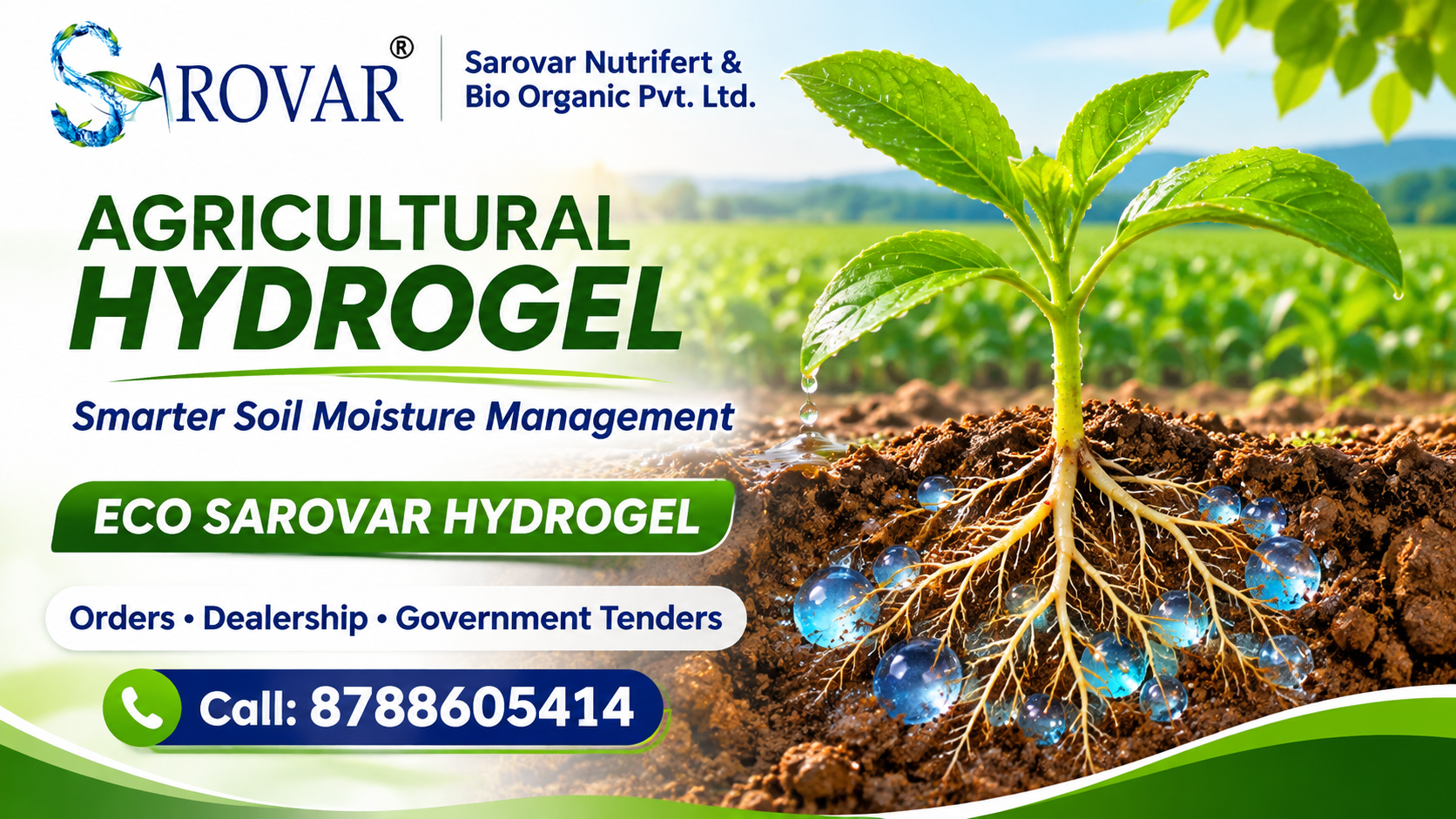
Agricultural hydrogel is a water-absorbing, soil-conditioning material designed to help retain moisture in the root zone of plants. Depending on its formulation, it can absorb water during irrigation or rainfall, swell into a gel, and gradually release some of the stored moisture as the surrounding soil dries.
It can be used in a variety of agricultural applications, including field crops, vegetables, fruit orchards, nurseries, landscaping, plantations and horticulture.
In regions affected by irregular rainfall, long intervals between irrigation, or rapidly drying sandy soils, agricultural hydrogel can be a useful component of a broader water-management strategy.
Why is agricultural hydrogel important?
Farmers may experience:
Rapid moisture loss from sandy and light-textured soils.
Irregular rainfall and delayed monsoon showers.
Moisture stress during seed germination and early crop establishment.
Increasing irrigation costs and pressure on water resources.
Difficulty maintaining consistent moisture around young plants and newly transplanted seedlings.
When selected and applied correctly, agricultural hydrogel can improve water retention near plant roots and help reduce moisture stress between watering events. Actual benefits depend on soil type, crop, climate, irrigation practices and the hydrogel formulation.
2. How Does Agricultural Hydrogel Work?
Agricultural hydrogel works through a repeated water absorption and release cycle.
Step 1: Hydrogel is placed in the root zone
The dry hydrogel is incorporated into soil near the seed or root zone according to the product instructions. It should be distributed evenly rather than left in a concentrated layer.
Step 2: Rainwater or irrigation water is absorbed
When water reaches the hydrogel, its water-attracting polymer network absorbs water and swells. The amount absorbed depends on the polymer, water quality, salinity and other conditions.
Step 3: The hydrogel stores moisture in the soil
The swollen gel acts as a small moisture reservoir within the treated soil. Its location near the roots is important because that is where plants take up water.
Step 4: Moisture becomes available as the soil dries
As the surrounding soil loses moisture, the hydrogel can release some of its stored water. This may help plants tolerate short periods between rainfall or irrigation.
Step 5: The hydrogel can absorb water again
When more rain or irrigation water reaches the treated area, a suitable hydrogel can absorb water again. This absorption-and-release cycle can repeat, although performance and useful life vary by formulation and field conditions.
Important: Hydrogel supplements soil-water management; it does not create water, replace all irrigation, or guarantee higher yields. Use it together with suitable irrigation scheduling, mulching where appropriate, soil testing and recommended crop practices.
3. How to Use Agricultural Hydrogel: Step-by-Step Guide
The best application method depends on whether you are sowing seeds, transplanting seedlings, planting fruit trees, establishing a nursery or treating an existing plantation.
Method A: Application Before Sowing Field Crops
Suitable for crops such as cotton, soybean, groundnut, pulses, maize, sorghum, pearl millet and other field crops when the product label permits the intended use.
Step 1 — Prepare the field
Prepare the land as usual. Remove weeds and large clods and complete the required field preparation.
Step 2 — Check the soil
Assess the soil texture and drainage. Sandy soils often lose water quickly, while heavy clay soils can have drainage and aeration limitations. Application rates should reflect soil conditions and the manufacturer's instructions.
Step 3 — Measure the recommended hydrogel quantity
Calculate the quantity according to the recommended rate per hectare or acre, the treated area, the crop and the product formulation. Do not assume that every hydrogel has the same dosage.
Step 4 — Mix for even distribution
If the product instructions recommend a carrier, mix the dry hydrogel thoroughly with fine, dry soil or another approved carrier. This helps distribute small quantities more evenly.
Step 5 — Place the mixture in the root zone
Apply the material in the seed furrow or designated soil zone at the recommended depth. Avoid placing concentrated hydrogel directly against seeds or young roots unless the label explicitly permits it.
Step 6 — Cover and sow
Cover the treated area with soil and sow the seeds at the normal crop-specific spacing and depth.
Step 7 — Irrigate or wait for effective rainfall
Provide the recommended initial moisture so the hydrogel can hydrate and the crop can establish. Continue monitoring soil moisture and irrigate according to crop requirements.
Method B: Application for Vegetable Crops
Suitable examples include tomato, chilli, capsicum, brinjal, cabbage, cauliflower, cucumber, gourds, okra and other vegetables, subject to the product label.
Prepare the raised beds, planting rows or designated planting areas.
Measure the hydrogel quantity using the crop and product recommendations.
Incorporate the material uniformly into the soil around the planned root zone.
For transplanted seedlings, place it in the planting zone and mix with soil rather than leaving a concentrated pocket.
Transplant the seedlings and cover the roots properly.
Irrigate immediately as required for establishment.
Monitor moisture around the root zone and adjust irrigation based on crop stage and weather.
For drip-irrigated vegetables, use only a formulation and application method approved for that system. Soil-incorporated hydrogel should not be added to irrigation tanks or drip lines unless specifically designed for that purpose.
Method C: Application for Fruit Trees and Orchards
Suitable examples include mango, pomegranate, citrus, guava, grapes, banana, sapota and other fruit crops, where permitted by the product instructions.
At the time of planting:
Prepare the planting pit according to the crop and local horticultural recommendations.
Measure the approved quantity for the tree or planting pit.
Mix the hydrogel evenly with suitable soil in the root-zone area.
Avoid concentrated contact with the root ball or delicate roots.
Position the plant at the correct depth and backfill the pit.
Water thoroughly to establish the plant and hydrate the treated soil.
Maintain appropriate irrigation, mulching and drainage.
For established orchards: Apply the product only through an approved method that places it within the active root zone. Avoid damaging roots when incorporating soil amendments.
Method D: Application for Nurseries and Transplanting
Suitable for vegetable seedlings, fruit-tree saplings, ornamental plants and plantation seedlings.
Confirm that the formulation is suitable for nursery media and the intended plant.
Measure the label-recommended quantity for the volume of soil or growing medium.
Mix it thoroughly and uniformly into the growing medium.
Fill the nursery bags, trays or containers without compacting the medium excessively.
Sow seeds or transplant seedlings according to normal nursery practice.
Water adequately and observe drainage, root development and media moisture.
Adjust watering to prevent waterlogging.
Nursery media have limited volume, so excessive hydrogel can cause unwanted swelling, alter air space or affect root development.
Method E: Application for Flowering and Ornamental Plants
Suitable examples include roses, marigold, chrysanthemum, ornamental shrubs and landscape plants when compatible with the formulation.
Prepare the potting mix or planting bed.
Calculate the dose based on the volume of growing medium or the planting area.
Mix the hydrogel evenly through the appropriate soil zone.
Plant the flower or ornamental species.
Water thoroughly after planting.
Monitor moisture, drainage and plant response.
For pots, containers and rooftop gardens, follow the container-specific directions. Avoid excessive application because the gel expands after absorbing water.
4. Crop-Wise Agricultural Hydrogel Application Guide
The following table describes suitable application approaches. It is a practical crop-selection guide, not a universal dosage chart.
Crop or plant typeTypical application approachMain objectiveCottonIncorporate into the recommended seed-row or root-zone soil before sowingHelp retain moisture during early establishment and dry intervalsSoybeanApply uniformly in the designated root zone at sowingSupport moisture availability during establishmentGroundnutPlace in the crop root zone according to the product labelHelp manage moisture in light soilsChickpea, pigeon pea and other pulsesIncorporate at sowing where the formulation is approvedSupport moisture management during early growthMaize and sorghumApply in the designated seed-row soil zoneHelp maintain root-zone moisture between water inputsPearl millet and other dryland cropsUse a label-approved application method suited to the soilSupport moisture conservation in dryland farmingTomato and chilliMix into the transplanting or root-zone soilHelp maintain moisture around developing rootsBrinjal and okraApply in the planting row or root zoneSupport moisture management during crop growthCabbage and cauliflowerIncorporate into the bed or transplanting zoneHelp maintain moisture during establishmentCucumber and gourdsUse the recommended rate in the designated root zoneSupport root-zone moisture managementBananaIncorporate into the planting pit or approved root-zone areaHelp retain moisture around the developing root systemMango and citrusApply during planting or through an approved method in the active root zoneSupport young-tree establishment and orchard moisture managementPomegranate and guavaApply in the planting pit or root zone as directedHelp manage moisture around the root systemGrapesUse only a compatible formulation and approved placement methodSupport root-zone moisture managementFruit-tree saplingsMix uniformly into the approved planting medium or soil zoneSupport transplant establishmentVegetable seedlingsMix into nursery media at the approved rateHelp manage moisture in small growing containersRoses and ornamental shrubsIncorporate into the planting bed or potting mediumHelp reduce rapid moisture lossForestry and plantation seedlingsApply in the planting pit or root zone as recommendedSupport seedling establishment in suitable sitesLawns and landscapingUse the formulation and incorporation depth recommended for the areaHelp improve moisture retention in the treated soil
Crop-wise dosage reminder: There is no single reliable dose for every crop. Rates depend on the hydrogel chemistry, product concentration, soil texture, salinity, root-zone volume, crop spacing and method of application. Obtain the approved crop-wise dosage from Sarovar Nutrifert before commercial field application.
5. How Much Agricultural Hydrogel Should Be Used Per Acre?
Farmers frequently search for hydrogel dosage per acre, but the correct quantity cannot be determined by crop name alone.
Before recommending a dose, consider:
Soil type: sandy, sandy loam, loam or clay.
Crop type: field crop, vegetable, fruit tree or nursery plant.
Application method: seed furrow, planting pit, nursery media or established root zone.
Product formulation: different hydrogels have different absorption and swelling characteristics.
Water quality: salts and dissolved minerals can reduce water absorption.
Planting density: a closely spaced field crop differs from an orchard with widely spaced trees.
For a product-specific recommendation, share the crop, soil type, area in acres and hydrogel product grade with the technical team.
Do not transfer dosage figures from another manufacturer's product directly to your farm. Follow the approved label and applicable agricultural guidance.
6. Best Practices for Better Results
Apply the hydrogel at the recommended time, preferably during the prescribed soil preparation or planting operation.
Place it in the intended root zone rather than scattering it randomly on the soil surface.
Ensure uniform distribution to avoid concentrated pockets.
Follow the recommended initial watering procedure.
Avoid waterlogging and maintain appropriate soil drainage.
Use only formulations approved for the intended crop and application method.
Do not mix with fertilizers, pesticides or other agricultural inputs unless compatibility has been established.
Continue appropriate irrigation, soil-moisture monitoring and crop nutrition practices.
Store the product as directed and protect it from moisture before use.
7. Common Mistakes to Avoid
Using too much hydrogel: Excessive swelling can change soil structure and restrict the available air space around roots.
Applying it only on the surface: Surface placement may not provide the intended benefit in the deeper root zone.
Using the same dose for every crop: Crop spacing, soil texture and product chemistry all affect the appropriate quantity.
Ignoring water quality: Saline or mineral-rich water may substantially reduce absorption compared with pure water.
Expecting hydrogel to replace irrigation: Hydrogel stores available water; it cannot compensate indefinitely for absent rainfall or inadequate irrigation.
Using an unsuitable formulation in drip irrigation: Some products are intended for soil incorporation and should not be introduced into irrigation equipment.
8. Why Choose Agricultural Hydrogel for Water Management?
When used correctly as part of a complete crop-management plan, agricultural hydrogel may help:
Improve moisture retention in treated soil.
Support crop establishment during short dry periods.
Reduce rapid moisture fluctuations around roots.
Improve water-use efficiency under suitable conditions.
Support nursery and transplant establishment.
Complement irrigation scheduling and soil-moisture conservation practices.
Results vary by crop, soil, weather, water quality and formulation. Farmers should evaluate the product under local conditions before expanding to large-scale use.
9. Sarovar Nutrifert & Bio Organic Pvt. Ltd. — Agricultural Hydrogel Manufacturer and Supplier
Sarovar Nutrifert & Bio Organic Pvt. Ltd. is focused on agricultural inputs and water-management solutions for Indian farming.
Sarovar Nutrifert is a leading and pioneering manufacturer and supplier of agricultural hydrogel and a wide range of hydrogel products for agricultural applications. We aim to support farmers, agri-input dealers, distributors, horticulture enterprises, institutions and agricultural development projects with suitable product solutions.
Whether you are preparing for sowing, establishing a new orchard, operating a nursery, supplying agricultural inputs or implementing a water-conservation initiative, contact our team to discuss product suitability, technical specifications, bulk requirements and supply arrangements.
Who can contact Sarovar Nutrifert?
Farmers seeking agricultural hydrogel for their crops.
Fertilizer and agri-input dealers looking for dealership opportunities.
Distributors and wholesalers seeking bulk agricultural hydrogel supply.
Nurseries, orchards, horticulture farms and plantation operators.
Agricultural companies and institutional buyers.
Government departments, public-sector organisations and procurement agencies seeking quotations or participating suppliers for agricultural hydrogel tenders.
Order Agricultural Hydrogel Today
To order agricultural hydrogel, enquire about dealership opportunities, request bulk supply, or discuss government tenders, call Sarovar Nutrifert at 8788605414.
Call our team for product information, crop-wise application guidance, commercial quotations and supply enquiries.
Sarovar Nutrifert & Bio Organic Pvt. Ltd.
Agricultural Hydrogel | Water Retention Solutions | Agricultural Inputs
Phone: 8788605414
Call today for agricultural hydrogel orders, dealership enquiries, wholesale supply and government tender enquiries.
10. Frequently Asked Questions About Agricultural Hydrogel
What is agricultural hydrogel used for?
Agricultural hydrogel is used to improve water retention in the treated root zone. Depending on the formulation, it can be used for field crops, vegetables, orchards, nurseries, plantations and landscaping.
Can hydrogel be used before sowing?
Yes, if the formulation is approved for the crop and soil application. Follow the prescribed rate, placement depth, mixing procedure and initial watering instructions.
Which crops can benefit from hydrogel?
Potential applications include cotton, soybean, groundnut, pulses, maize, vegetables, fruit crops, nursery plants and ornamental species. Suitability must be confirmed for the specific product and crop.
Is hydrogel useful in sandy soil?
Hydrogel may be particularly useful where soil loses moisture rapidly. However, application rates and expected results depend on the product, water quality and local growing conditions.
Can hydrogel eliminate irrigation?
No. Hydrogel stores water that is available from rainfall or irrigation. It is a supplementary water-management tool, not a complete replacement for irrigation.
How do I calculate hydrogel dosage per acre?
The recommended rate depends on the formulation, crop, soil type, planting density and application method. Contact Sarovar Nutrifert at 8788605414 for product-specific guidance.
How can I become a Sarovar Nutrifert hydrogel dealer?
Contact 8788605414 to enquire about dealership, distribution, wholesale supply and commercial terms.
Does Sarovar Nutrifert supply agricultural hydrogel for government tenders?
For government procurement, institutional requirements, bulk quotations and tender-related supply enquiries, call 8788605414 to discuss specifications and availability.
Final Call to Action
Save Water. Support Better Crop Management. Choose the Right Agricultural Hydrogel.
Improve your farm's water-management strategy with a suitable agricultural hydrogel solution from Sarovar Nutrifert & Bio Organic Pvt. Ltd.
For orders, dealership, wholesale supply and government tender enquiries, call 8788605414 today.
Suggested SEO Tags
Agricultural Hydrogel, Hydrogel for Agriculture, Hydrogel for Farming, Agricultural Hydrogel Manufacturer India, Agricultural Hydrogel Supplier India, Hydrogel for Plants, Soil Water Retention Polymer, Hydrogel Dosage Per Acre, Hydrogel for Cotton, Hydrogel for Soybean, Hydrogel for Vegetables, Hydrogel for Fruit Trees, Hydrogel for Horticulture, Hydrogel for Dryland Farming, Agricultural Hydrogel Dealership, Hydrogel Wholesale Supplier, Sarovar Nutrifert, Eco Sarovar Hydrogel, Agricultural Water Management, Government Agricultural Hydrogel Tender.
Suggested Social Media Hashtags
#AgriculturalHydrogel #HydrogelForFarming #EcoSarovarHydrogel #SarovarNutrifert #WaterManagement #WaterConservation #SustainableAgriculture #SmartFarming #Horticulture #DrylandFarming #IndianAgriculture #AgriInputs #FarmersOfIndia #AgricultureInnovation